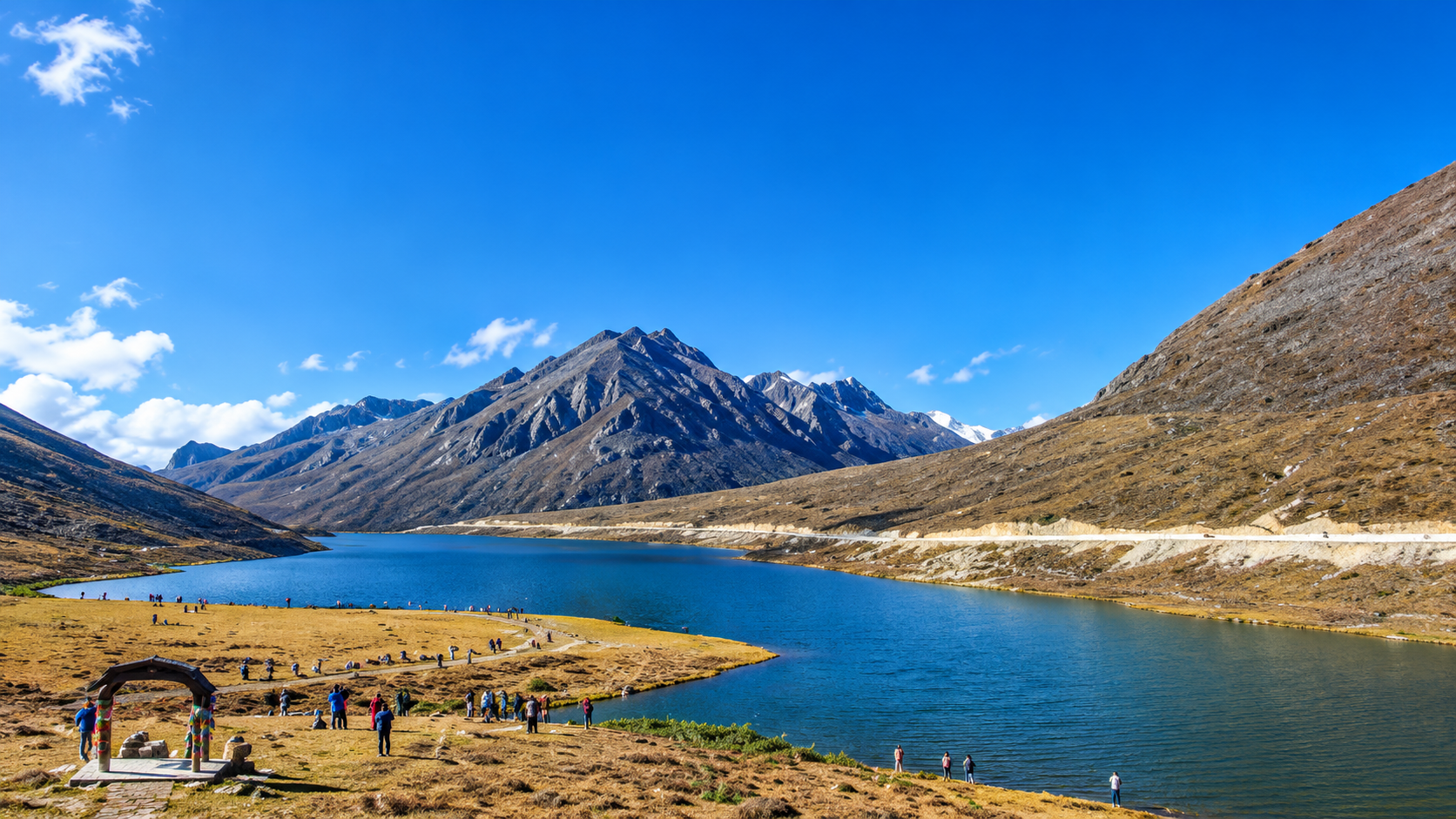
Arunachal Pradesh, aptly known as the Land of the Dawn-Lit Mountains, is the first Indian state to greet the rising sun. As I journeyed through this beautiful region tucked away in the eastern Himalayas, I found myself surrounded by snow-dusted mountain passes, ancient monasteries, glacial lakes, and valleys where nature and culture exist in remarkable harmony. It was a place where every turn revealed a new landscape, every monastery held centuries of faith, and every journey felt like an escape into another world.
My journey began in Guwahati and gradually made its way to the charming village of Shergaon. As the plains gave way to winding mountain roads, navigating a series of 18 sharp hairpin turns, the landscape transformed into lush forests, quiet settlements, and breathtaking Himalayan views. A visit to Bomdila Monastery offered me my first glimpse into the region’s deep-rooted Buddhist traditions. Surrounded by mountains, the monastery was a peaceful space where prayer flags fluttered in the mountain breeze, and the gentle rhythm of prayer created an atmosphere of calm. The nearby Bomdila View Point offered sweeping views of the surrounding valleys, making the journey to Shergaon all the more memorable.
The road to Tawang was an experience in itself. Crossing the magnificent Sela Pass, one of the highest motorable mountain passes in the world, felt almost surreal. The beautiful Sela Lake, nestled amidst the mountains, reflected the changing colours of the sky, creating a scene of extraordinary stillness. Along the way, I stopped at Jaswant Garh War Memorial, a tribute to the courage and sacrifice of Indian soldiers during the 1962 Indo-China War. Standing there evoked a deep sense of gratitude and respect, reminding me of the stories of bravery woven into these mountains.
Tawang welcomed me with an extraordinary blend of spirituality, history, and natural beauty. Its most treasured landmark, Tawang Monastery, is one of the largest Buddhist monasteries in India and an important centre of Mahayana Buddhism. Walking through its colourful murals, prayer halls, and ancient scriptures, I experienced a way of life deeply connected to faith and mindfulness. The peaceful presence of monks added to the serenity of the surroundings. The Giant Buddha Statue left me equally captivated, while the Tawang War Memorial offered another opportunity to reflect on the sacrifices of those who defended the region. Jung Waterfall was a sight of pure beauty and power, located just a short distance away. Together, these places brought history, devotion, and reflection into one unforgettable experience.
For me, one of the most extraordinary experiences was the excursion towards Bumla Pass and Madhuri Lake. The landscapes here were unlike anything I had seen before. Located near the India-China border, Bumla Pass is surrounded by dramatic mountain terrain and holds considerable historical significance. Madhuri Lake, also known as Sangestar Lake, was particularly captivating, with its still waters, striking rock formations, and tree trunks rising from the lake. PTSO Lake added another beautiful stop to this high-altitude experience. Surrounded by such magnificent landscapes, I found myself pausing more often, simply taking in the beauty around me. It reminded me of how beautiful the world can be when untouched by the rush of everyday life. The unplanned diversion to Holy Waterfall was a pious and soul-searching experience. The Army maintains these places with equal sanctity.
As I continued towards Dirang, the mountains began to reveal another side of Arunachal Pradesh. Here, traditional settlements, Buddhist heritage, and scenic valleys came together in a quieter, more intimate setting. Dirang Dzong, with its traditional architecture and historic charm, offered me a glimpse into the region’s Monpa heritage. The nearby Dirang Monastery reflected the community’s spiritual traditions, while Sangti Valley welcomed me with its open landscapes, gentle rivers, and peaceful surroundings. I cannot forget the kiwi and ramphal orchards and the joy of plucking ripe fruits with the help of local growers. A visit to the natural hot spring offered a refreshing pause, and the apple orchards added another charming touch to the region’s rural beauty.
My return to Guwahati brought the journey to a spiritual close with a visit to Kamakhya Temple, one of India’s most revered Shakti Peethas. Perched atop Nilachal Hill, the temple is deeply rooted in the worship of Goddess Kamakhya and holds immense significance in the Shakta tradition. Its distinctive architecture, sacred atmosphere, and the devotion of countless pilgrims made it an experience unlike any other. Standing there, I was reminded of the diverse spiritual traditions that make Northeast India so culturally rich.
Perhaps what stayed with me long after leaving Arunachal Pradesh was not just the beauty of its landscapes, but the feeling of being surrounded by something much larger than myself. The silence of the mountains, the fluttering prayer flags, the warmth of its people, and the timeless presence of its monasteries created an experience that was both grounding and uplifting.
At SilverGenie Wanderlust, every detail of this journey was thoughtfully planned and curated, from the scenic routes and cultural experiences to the stays and local explorations. The experience brought together nature, heritage, spirituality, and comfort, allowing me to immerse myself in the destination without worrying about the details.
Arunachal Pradesh was more than a destination. It was where the first light touched the mountains, faith found its quiet expression, and I discovered a serenity that stayed with me long after the journey ended.